If you want a hands-on cultural experience in Lijiang, Baisha offers more than a quick photo stop. A local report published on October 23, 2026 described three experiences at Baisha JinXiu Art Institute: Naxi embroidery, Dongba handmade paper and an introduction to Dongba pictographic writing. The right choice depends on whether you want to make something, understand a craft process or learn about a writing tradition.
This guide separates reported details from items that need checking. The same October 23 report said a ticket-stub promotion began on October 15: qualifying visitors arriving in Lijiang could receive 20% off the institute's Naxi intangible-cultural-heritage handcraft experiences. It did not state an end date. Treat the offer as unconfirmed for your travel date until the venue verifies it.
What is in Baisha, and what is Dongba?
Baisha is a historic Naxi town north of central Lijiang. It is a quieter place to slow down, but an activity advertised as “heritage” can mean very different things: watching a demonstration, completing a small visitor project, or joining a longer class. Ask which one is actually offered.
Dongba is associated with Naxi religious and cultural traditions. Dongba pictographic writing is not simply decorative calligraphy: it belongs to a living cultural knowledge system. A short workshop is an introduction, not a course that makes a visitor an expert. Approach the symbols with curiosity, and ask the teacher to explain the context and the limits of what a brief session can cover.
One important distinction: the Lijiang report describes a workshop at a Baisha venue; it does not establish that Baisha is the historic origin of Dongba handmade paper. The national intangible-heritage record locates the traditional paper-making craft in Baidi Village, Sanba Naxi Township, Shangri-La. A visitor experience in Baisha is a way to encounter and learn about a craft, not proof of where the craft originated.
Compare the three reported activities
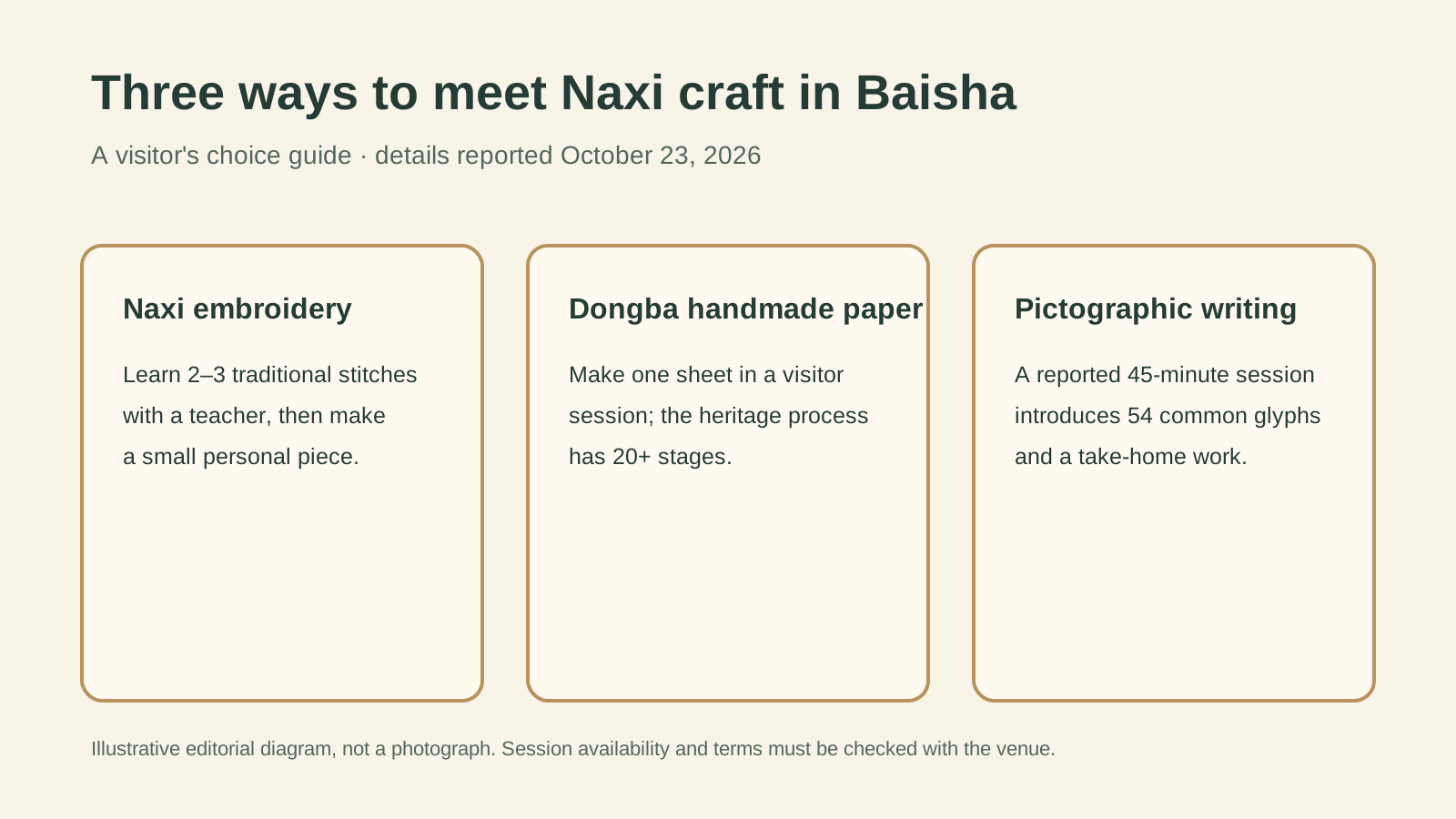
The October 23 interview with Naxi embroidery inheritor and teacher Kang Yanping described these formats:
- Naxi embroidery: visitors learn two or three traditional stitches with a teacher and work on a personal piece. Choose this if you are comfortable with a slower, careful activity and want to focus on pattern, thread and hand movement.
- Dongba handmade paper: visitors make one sheet through a guided activity. The report notes that the traditional process involves more than 20 stages. A short session cannot reproduce every stage in full; ask which parts are demonstrated and which you will do yourself.
- Dongba pictographic writing: the reported 45-minute session introduces 54 common characters and lets visitors complete a piece of writing on handmade Dongba paper. This is the most compact option, but it still needs explanation. Ask whether interpretation is available in a language you understand.
These descriptions come from a media interview, not a live booking calendar. Confirm that the activity is currently running, how long it takes, what materials are included, and whether the cited format is still offered.
How to choose the right experience
Start with the kind of memory you want. If you want to take home something you made, ask what portion of the object visitors complete and whether it needs drying or finishing later. If you want to learn about Naxi symbols and their context, ask for a teacher-led explanation rather than assuming a writing activity explains itself. If you have limited time, ask about the full door-to-door duration, not only the advertised class length.
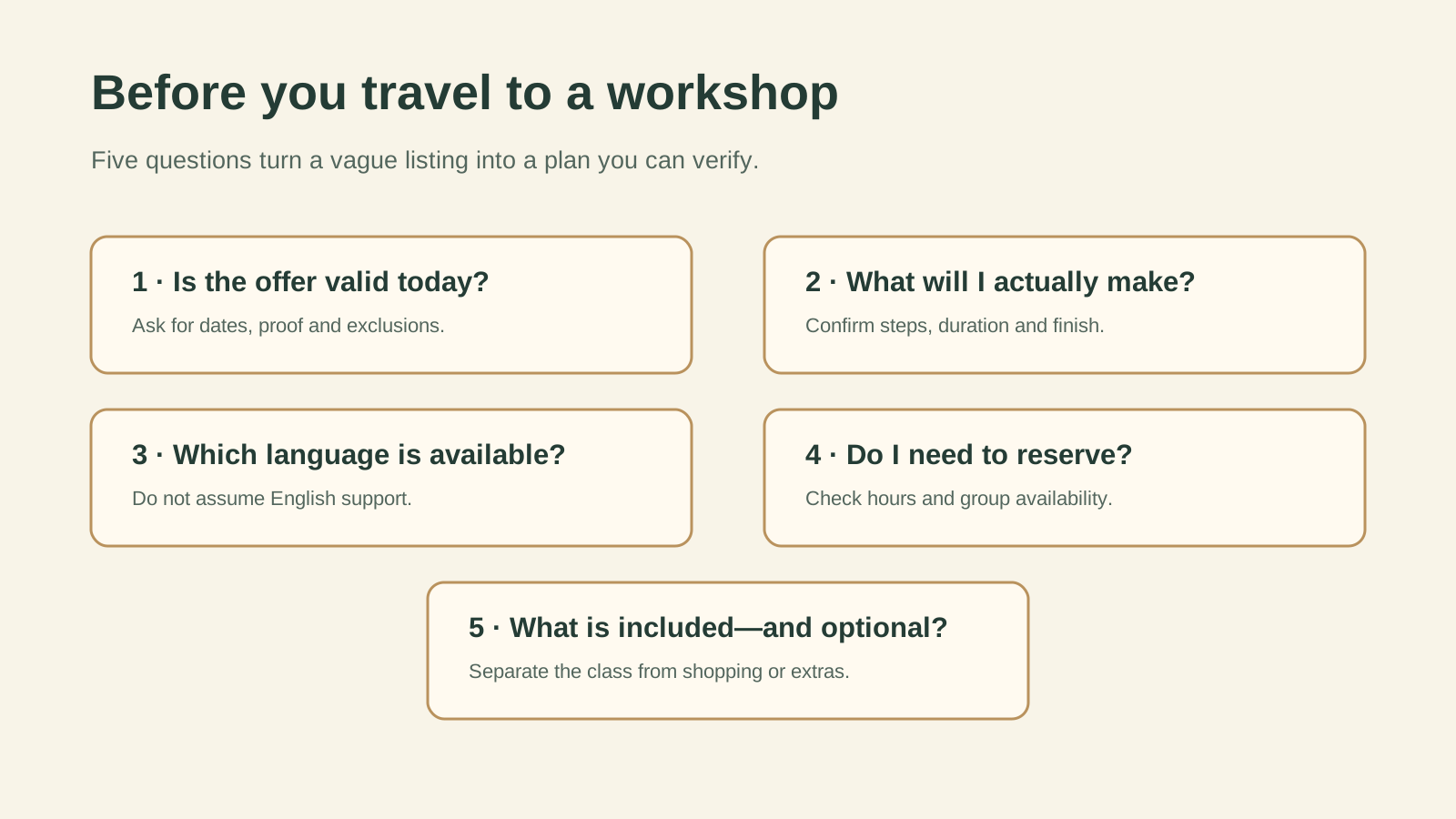
Before you commit, ask:
- What exactly will I make or learn?
- Which steps will I do myself, and which will the teacher demonstrate?
- What language can the instructor use? Is interpretation available, and is it included?
- Do I need to reserve a time or join a minimum-size group?
- What does the stated fee include? Are shopping or extra materials optional?
- May I photograph the activity, and are there any restrictions?
Do not assume English-language support because a venue appears in international travel content. Nor should you assume that a ticket-stub promotion applies to foreign visitors, all ticket types or every day. Ask the venue to confirm the acceptable proof and current terms.
What the ticket-stub offer says—and does not say
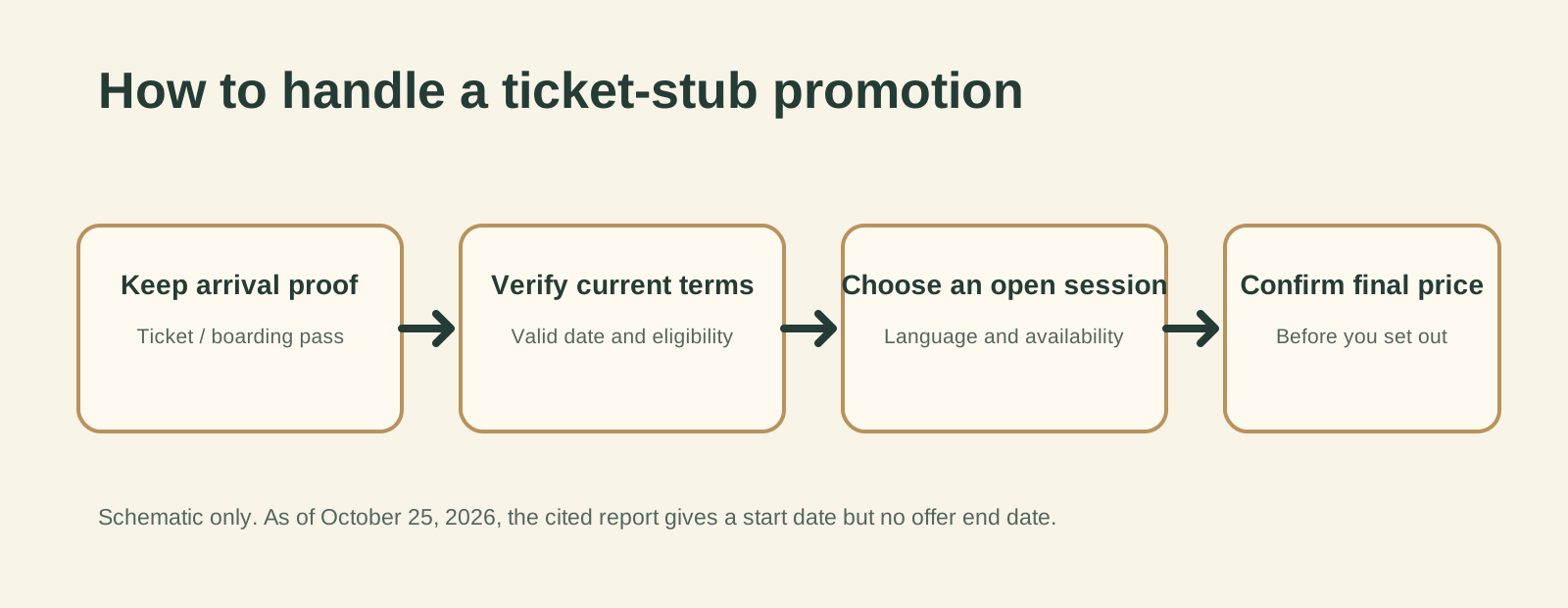
According to the October 23, 2026 report, the institute's offer started October 15. Visitors arriving in Lijiang with their own flight ticket, boarding pass, train ticket or corresponding electronic travel proof could receive a 20% discount from the official uniform price for Naxi heritage handcraft experiences. The report described no additional threshold or hidden charge.
It does not state the offer's end date, list every excluded date or explain how long a proof remains valid. It also does not replace confirmation of workshop capacity, language, reservation or the final price. If the promotion affects your decision, save your travel proof and verify all of those details directly before you travel.
The venue's own site describes its work as protecting and promoting Naxi embroidery and Dongba culture. That background is useful, but it is not a substitute for a current schedule or confirmation that a particular session is available on your date.
Plan a visit without turning it into a rushed stop
Baisha can fit into a Lijiang day, but leave room for travel between places, a meal and the workshop itself. Do not assume that a 45-minute lesson means a 45-minute visit: arrival, orientation, choosing materials and finishing the piece may take longer.
If you are visiting during a busy period, confirm the date and time before setting out. Ask where to meet using a map pin from the venue, rather than relying on a broad “Baisha Old Town” label. Check whether the class is suitable for children or anyone who may find fine stitching difficult. If you have mobility or sensory needs, ask what the room, seating and tools are like.
For a comparison with a different Yunnan craft, see How to Choose a Bai Tie-Dye Workshop in Dali. Bai tie-dye and Naxi craft are distinct traditions; one should not be used as a stand-in for the other. For a wider framework, read How to Choose a Meaningful Local Experience in Yunnan.
Respectful participation
Ask before photographing teachers or other participants. Follow the teacher's guidance on handling tools and interpreting symbols. A visitor-made object is a personal introduction, not a reproduction of the full knowledge or skill behind the craft.
Be cautious of claims such as “learn the whole tradition in an hour.” A well-run introduction makes its limits clear and gives credit to the people who teach and maintain the practice. Buying a souvenir is optional. Listening, asking specific questions and respecting photography boundaries are part of the experience.
Frequently asked questions
Where is the Naxi workshop described in this guide?
The October 23 report describes Baisha JinXiu Art Institute in Baisha Old Town, Lijiang. Confirm the current meeting point with the venue before travelling.
Which activity is best for a short visit?
The report describes a 45-minute Dongba writing introduction, but that is the activity time, not necessarily the total visit. Confirm setup, interpretation and finishing time.
Can international visitors join?
The source describes visitors taking part, including a Spanish family in a papermaking session. It does not specify language support. Ask the venue which languages are available on your date.
Is the 20% discount still available?
The report says it began October 15, 2026, but gives no end date. Verify the offer's current validity and proof requirements directly before you go.
Is Dongba paper originally from Baisha?
The cited national heritage record places the traditional craft in Baidi Village, Sanba Naxi Township, Shangri-La. Baisha is a venue for a visitor experience, not established here as the craft's place of origin.
Do I need to book?
The current media report does not publish a booking rule or live availability. Contact the venue using its official channels and confirm the date, activity and group size.
Sources and timing
Details were checked on October 25, 2026. The promotion and session formats are time-sensitive; reconfirm before travel.
- Lijiang Media Center: “Bring a ticket stub to Baisha and learn a craft,” October 23, 2026
- Baisha JinXiu Art Institute, official site
- China Intangible Cultural Heritage Digital Museum: Naxi handmade paper
If you are comparing hands-on experiences, Project Unicorn can help turn your priorities into a short list of questions to verify with the venue. We do not claim to book this workshop or guarantee its schedule, language support or promotion.